My role as a team lead for design and build of a new generation of cassava graters led to creating a product that was more accessible to women in Ghana running homes and businesses while being able to remain independent.
Taking on this role, I took on the responsibility of the design process and communication with our partner in Ghana, a non-profit organization founded by the women of Ghana. Through customer feedback of their current products and their competitors, I targeted three areas where my team and I could focus on to create a new processor that allows businesses and homes maintain their autonomy.
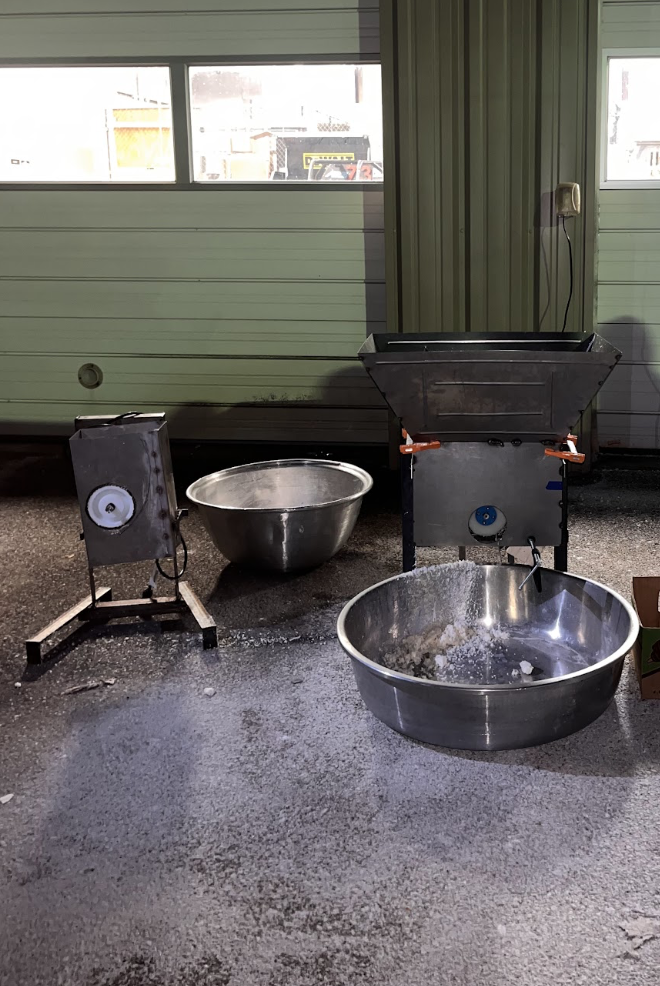
Through consumer feedback, my team and I targeted three areas in a grater that our competitors failed to explore for our users:
Power
Volume
Mobility
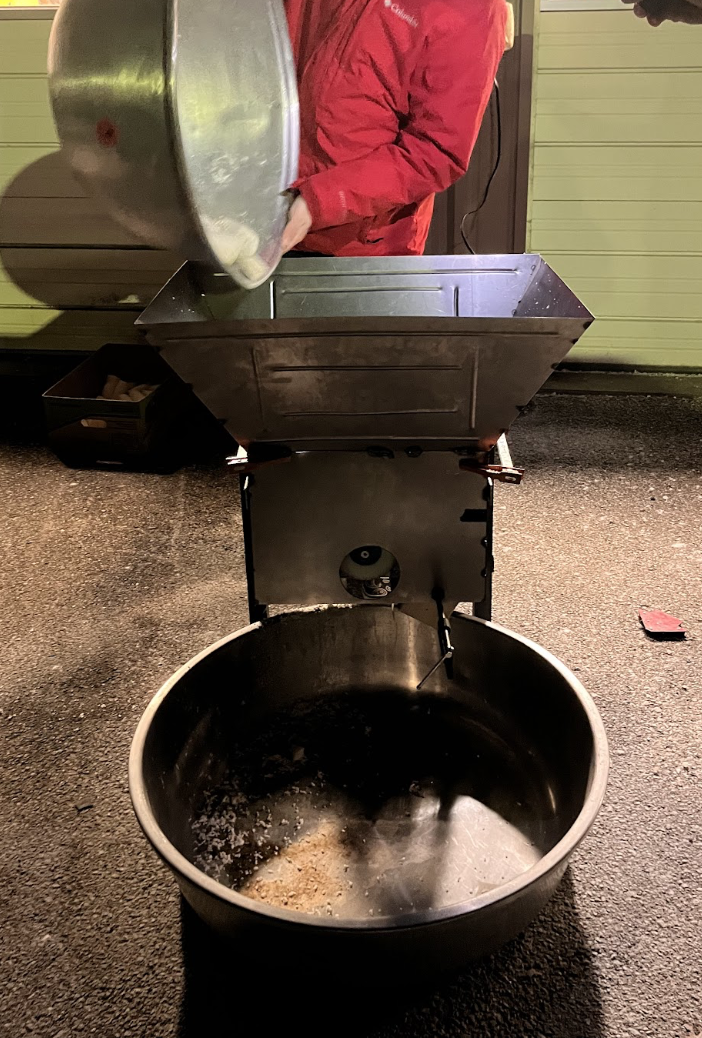
The video shows a tested prototype of our next generation auto-feeder. Once our auto-feeder and grater were integrated, we performed user testing with real cassava that we prepped ourselves.
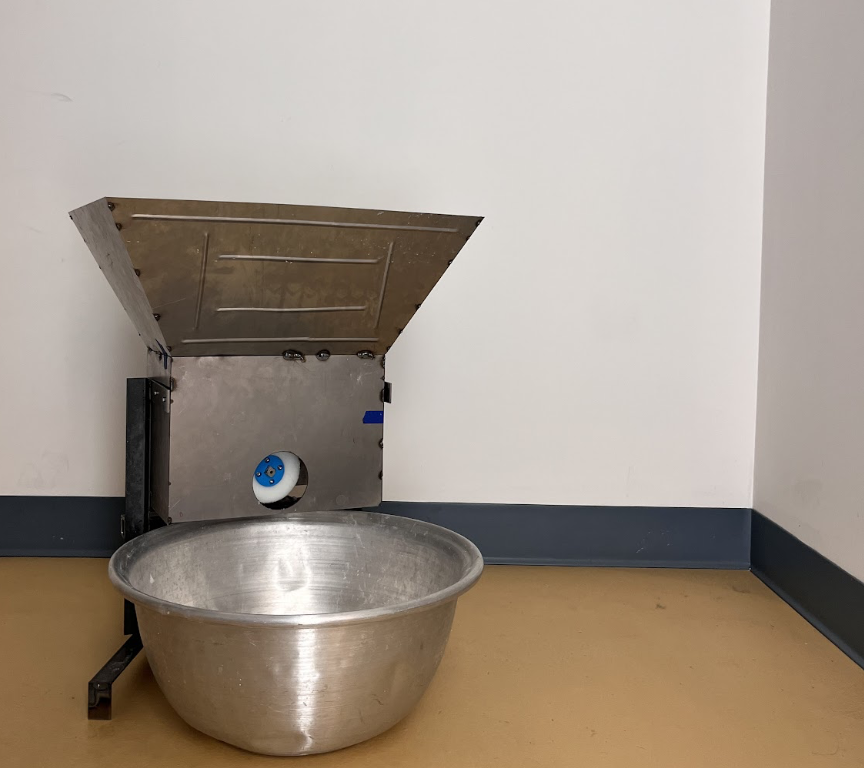
By investing in a motor with twice the power, we were able to put more focus into creating a larger grater that would
Process 12 gallons of cassava in one feed
Rest at average hip height for women in Ghana
Include wheel attachments for mobility
These design choices allowed me to prioritize fabrication in the shop and track team trainings throughout the build and assembly process.
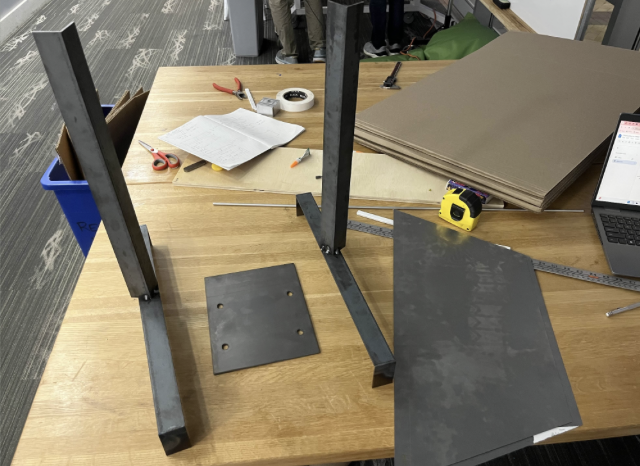
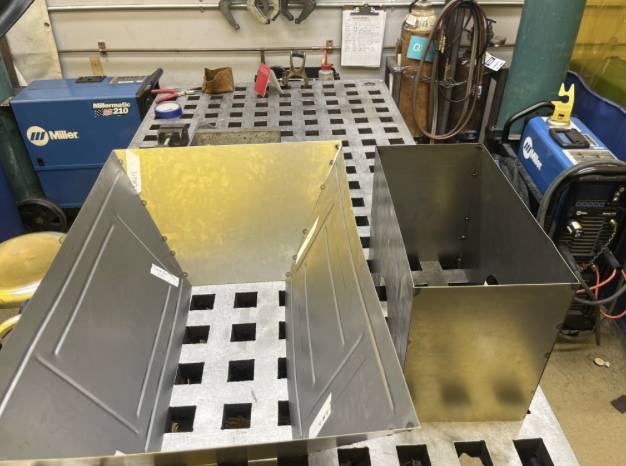
With my technical skills, I designed and built the legs and chute of the grater with my team. Specifically, I:
Designed the leg orientation to account for center of mass with sketch modeling and OnShape
Fabricated the new chute with sheet metal, plasma cutting, and MIG Welding
Integrated the skeleton of the grater with our new motor and auto-feeder
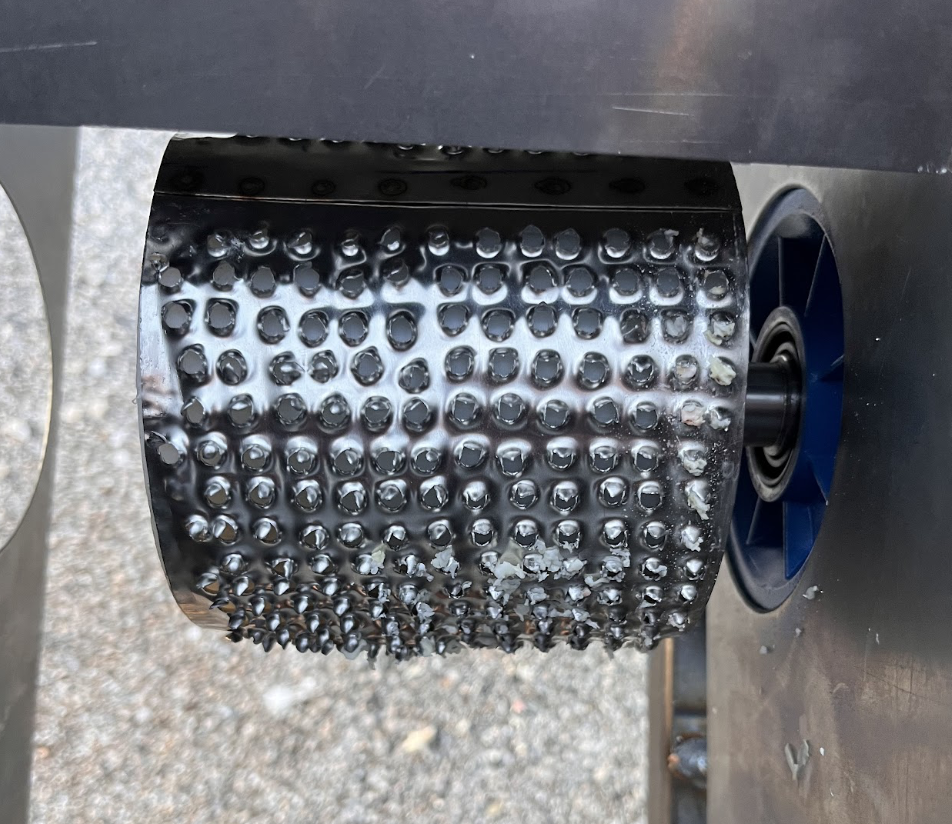
Tested functionality of grater to confirm cassava was being grated without any metal interference